The All Sorted Journal
Subtle luxury, refined systems for the modern home.
The Quiet Shift Into Spring: Preparing Your Home Before the Season Changes
As winter fades, small adjustments at home can make everyday life feel lighter and easier. Learn how preparing your systems now creates a calmer transition into spring.

There’s a moment every year — usually sometime in early March — when winter begins to loosen its grip.
The light lingers a little longer in the evening. Snow starts to melt at the edges of sidewalks. Windows open briefly, even if only for a few minutes of fresh air. And inside our homes, something shifts as well.
We begin to feel ready for change.
For many people, that feeling immediately translates into “spring cleaning.” Lists appear. Closets get emptied all at once. Entire weekends are dedicated to catching up with a home that suddenly feels heavy after months indoors.
But lasting calm rarely comes from a seasonal burst of effort.
Instead, the most effective homes move through a quieter transition — one built on preparation rather than overhaul.
March is not the time to organize everything.
It’s the time to prepare your home for the season ahead.
Why Early Spring Is a Transition — Not a Reset
After a long New England winter, our homes carry the weight of the season:
Entryways filled with coats and boots
Pantries stocked for colder months
Closets holding layers no longer needed daily
Surfaces that slowly accumulated the rhythm of indoor living
Nothing is necessarily wrong. These systems supported winter well. But as routines begin to change, friction appears.
You might notice:
Getting dressed feels more complicated than it should.
Storage feels crowded even though nothing new has arrived.
Daily routines take slightly more effort.
This isn’t clutter appearing overnight. It’s simply a signal that your home is ready to transition alongside the season.
Preparation Creates Ease Later
One of the biggest misconceptions about organizing is that it should happen all at once — a dramatic before-and-after moment tied to motivation or a calendar date.
In reality, the homes that feel consistently calm are adjusted gradually.
Professional organizers often think in seasons, not projects. Each season asks something different of a home. When systems evolve ahead of that change, spring feels effortless rather than overwhelming.
March offers a unique advantage:
Winter routines are still visible.
Spring habits haven’t fully begun.
You can adjust thoughtfully instead of reacting later.
A small amount of preparation now prevents a large amount of stress later.
Where to Focus During the March Transition
Rather than deep cleaning or reorganizing entire rooms, early spring preparation works best when focused on a few high-impact areas.
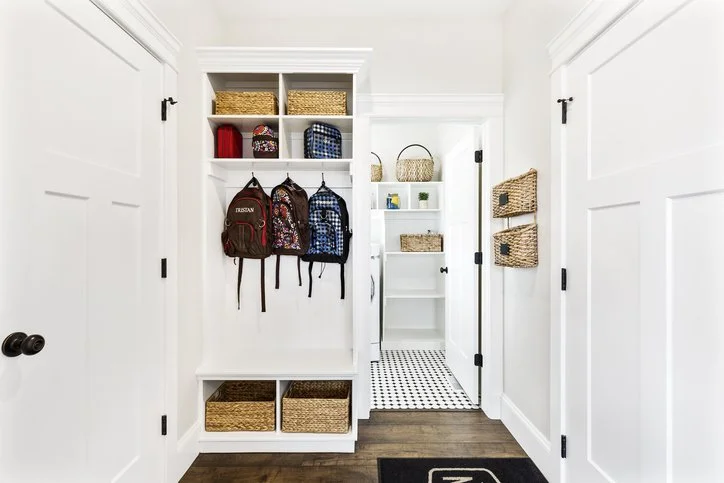
1. The Entryway: Lightening the Daily Arrival
Entryways carry the heaviest burden during winter. Boots, scarves, heavy coats, and accessories accumulate because they are used constantly.
March is the ideal moment to begin editing gently:
Remove items no longer used daily.
Reduce duplicates that built up during colder months.
Create breathing room without fully packing winter away.
The goal isn’t seasonal storage yet — it’s restoring ease to everyday movement through the space.
When arrival feels simple again, the entire home feels calmer.
2. Closets: Making Space for What’s Next
Closets often feel most frustrating at the end of winter because they are still optimized for cold weather while our routines begin shifting.
Instead of a full seasonal swap, start with refinement:
Identify pieces no longer being worn regularly.
Group heavier items together rather than dispersing them.
Create visible space for transitional clothing.
This small adjustment makes getting dressed easier immediately while preparing for a smoother seasonal change later.
3. Pantry Systems: Transitioning Out of Winter Habits
Winter cooking tends to prioritize comfort and convenience — soups, pantry staples, snacks for long evenings indoors.
As schedules become busier in spring, households often shift toward lighter meals and quicker routines. Yet pantry organization rarely adjusts at the same pace.
March is a good time to:
Consolidate duplicates.
Bring frequently used items forward.
Reevaluate snack zones based on current routines.
A pantry aligned with real life reduces daily decision fatigue more than any label ever could.
4. Paper and Household Administration
Tax documents, school notices, and accumulated mail often peak during late winter. Without attention, paper becomes background noise that quietly increases stress.
Early spring preparation means:
Clearing intake areas.
Completing small pending decisions.
Resetting paper systems before spring schedules accelerate.
This creates mental clarity that extends far beyond a single drawer or folder.
Why Preparation Feels Different Than Spring Cleaning
Spring cleaning focuses on tasks.
Preparation focuses on support.
Cleaning asks: What needs to be done?
Preparation asks: What would make daily life easier?
This distinction matters.
When organizing is approached as preparation, homes evolve naturally with the people living in them. The process feels calm, intentional, and sustainable — not exhausting.
Instead of chasing a perfectly organized house, you create systems that quietly adapt to changing seasons.
Small Adjustments, Lasting Impact
One of the most surprising truths about organizing is how little needs to change to create meaningful relief.
You don’t need a full weekend overhaul.
You don’t need new products.
You don’t need to organize every room.
Often, adjusting just a few systems allows the entire home to function differently.
A cleared entryway reduces daily stress.
A refined closet simplifies mornings.
A reset pantry supports new routines.
These changes compound, creating a home that feels lighter long before spring officially arrives.
Moving Into Spring With Intention
As March unfolds across Boston and Greater Boston, homes naturally begin shifting toward a new season — more movement, more light, and fuller schedules.
Preparing your home now allows that transition to happen smoothly.
Instead of reacting to clutter later, you move into spring already supported by systems designed for how you actually live.
At All Sorted, organizing is approached as a thoughtful, tailored process — one that evolves with the rhythms of real life and the changing seasons. The goal is never perfection. It’s creating refined systems that quietly make everyday living easier.
Because when your home supports you well, seasonal change feels less like work — and more like renewal.
Subtle luxury, refined systems.
All Sorted — Greater Boston & MetroWest.
Stuck Inside This Winter? Create Systems That Make Everyday Life Easier
When winter keeps us inside, our homes reveal what isn’t working. Thoughtful systems — not full overhauls — can make everyday life calmer, easier, and more supportive during the long winter months.
Winter has a way of slowing everything down.
The days are shorter. The weather keeps us inside. Life feels a little more compressed within the walls of our homes—especially during a New England winter, when snowy days and cold temperatures keep families home more than usual.
And while January often brings a rush to declutter or “start fresh,” February is different. It’s quieter. More honest. This is the point in the season when you really notice what isn’t working in your home—not because you’re looking for a project, but because you’re living in it more.
If being home this winter feels harder than it should, it’s rarely because you need to organize everything. More often, it’s because the systems supporting your daily life need refinement.
Winter Reveals the Friction in Your Home
When you’re in and out all day, small inefficiencies are easy to ignore. But winter brings routines into sharper focus—particularly for busy households across Greater Boston, where snow gear, school schedules, and indoor living all converge at once.
Coats pile up because there’s nowhere intuitive to put them.
Snacks overflow because pantry systems don’t match how your household actually eats.
Paper accumulates because mail and school forms never fully get processed.
Closets feel chaotic because seasonal transitions haven’t been addressed thoughtfully.
These aren’t failures. They’re signals.
Winter is often the first time clients tell us, “I feel like my house is working against me.” What they’re really describing is a lack of systems—clear, intentional structures that make everyday actions feel easier instead of more demanding.
Why Winter Is the Ideal Time to Refine Systems
There’s a misconception that organizing should happen in a burst of energy—spring cleaning, a big purge, a full weekend overhaul. In reality, winter offers something more valuable: time and proximity.
You’re already home.
You’re already noticing patterns.
You’re already interacting with your spaces more consistently.
That makes winter an ideal season for system refinement, not reinvention.
Instead of asking, “What should I organize?” the better question is:
“Where does my home create friction in my daily life?”
High-Impact Systems to Focus on While You’re Inside
You don’t need to tackle your entire home to feel a meaningful shift. A few strategic systems can dramatically change how calm and functional your space feels this season.
1. The Entryway: Containing the Chaos of Winter Living
Winter magnifies entryway issues more than any other season. Coats, boots, bags, scarves, hats, sports gear—it all arrives at once.
A refined entry system answers three questions clearly:
Where does each category live?
Is it easy to access and return?
Does the volume match real life?
This might mean:
Reducing outerwear to what’s actively in rotation
Assigning intentional zones rather than a single overcrowded hook area
Using containers or drawers that visually calm the space, even when full
When the entry works, the rest of the home feels quieter.
2. Pantry & Snack Flow: Supporting How You Actually Eat in Winter
Winter eating habits are different. We snack more. We cook more. We’re home more often.
Yet many pantries are still set up for an idealized version of life—rather than how the household truly functions day to day.
A well-designed pantry system considers:
Everyday access versus backstock
Visual clarity (being able to see what you have)
Ease for every household member, including children
This isn’t about labeling everything. It’s about reducing decision fatigue so grabbing a snack or making dinner feels simple and calm—not chaotic.
3. Paper & Command Areas: Quieting the Mental Noise
Paper tends to multiply in winter: mail, school notices, receipts, seasonal forms. When there’s no clear system, these items linger on counters and tables, creating constant background stress.
A refined paper system doesn’t require complicated filing. It requires:
Clear intake points
Defined action categories
Regular, manageable rhythms for processing
When paper has a place, your mind can rest. The home feels lighter—even if the weather outside is heavy.
4. Closets & Seasonal Transitions: Making Space for the Now
Winter is often when closets feel most frustrating. Bulky clothing takes up space. Off-season items linger. Storage becomes less intuitive.
Rather than fully reorganizing, winter is an ideal time to:
Edit what’s truly being worn
Store non-seasonal items intentionally
Create breathing room so getting dressed feels easy again
This isn’t about minimalism. It’s about relevance—keeping what supports your current season of life front and center.
Systems Matter More Than Labels or Containers
One of the most common misconceptions about organizing is that it starts with products. In reality, products only work when the system behind them is sound.
A beautiful bin without clarity still creates confusion.
A labeled drawer without logic still causes friction.
True organizing—especially during a long winter season—is about:
Understanding routines
Matching storage to behavior
Designing systems that feel intuitive, not forced
This approach is particularly important in high-density urban homes and older properties throughout Boston and Greater Boston, where thoughtful systems matter more than square footage.
When Being Home Feels Heavy, Support Can Help
Winter doesn’t need to be a season of frustration inside your home. With a few refined systems in place, being inside can feel calmer, more supportive, and easier to live with—day after day.
At All Sorted, we work with clients throughout Boston and Greater Boston, creating tailored organizing systems that blend elegance and function. We don’t rush. We don’t overwhelm. We design refined systems that quietly support the way you live now—and the way you want your home to feel.
If your home feels harder than it should this winter, thoughtful support may be closer than you think.
Subtle luxury, refined systems.
All Sorted — Greater Boston & MetroWest.
Holiday Home Prep: 7 Spaces That Make the Biggest Difference
A focused edit of just a few key spaces can transform your holiday season. Start with these seven high-impact areas for instant ease.
The holiday season brings so much joy — and also, a little more of everything. More cooking, more guests, more movement, more gear.
A thoughtful edit of just a few key spaces can shift the energy of your home before the holiday rush begins. Small, intentional improvements create instant ease.
1. The Entryway
Your entry is the first and last touchpoint of your home. Coats, boots, bags, mail, packages — everything lands here.
A quick edit instantly reduces visual noise.
Tip: Keep only daily-use items here.
2. Kitchen Countertops
Holiday cooking brings out everything. Clearing countertops makes the entire kitchen feel more spacious and improves flow.
Tip: Hide appliances you don’t use daily.
3. The Pantry
Editing expired items, decanting essentials, and creating zones makes the holidays smoother from the first meal.
Tip: Prioritize clear containers and simple categories.
4. The Guest Room / Multipurpose Room
Clear surfaces, refresh linens, and remove stray items to create a calm landing space for guests.
Tip: One catch‑all basket is enough.
5. The Linen Closet
A streamlined linen closet helps you find what you need fast and makes hosting feel intentional.
Tip: Keep only linens you truly use.
6. The Living Room
Editing blankets, books, toys, and surfaces creates breathing room for gatherings.
Tip: Use the rule of three when styling surfaces.
7. The Primary Closet
Editing what no longer fits or supports your lifestyle frees up valuable space.
Tip: Keep only what you reach for.
A Small Edit Creates Big Ease
You don’t need to organize your entire home to feel ready for the holidays.
A focused edit in even one of these spaces shifts the tone of your season.
If you’d like support preparing your home, I’d be honored to help.
Subtle luxury, refined systems.
All Sorted — Greater Boston & MetroWest.